- And Now What?
- Posts
- This message will self-destruct, but you can change that.
This message will self-destruct, but you can change that.
How to speak without self-destruction

Stephen Nock
November 18, 2025
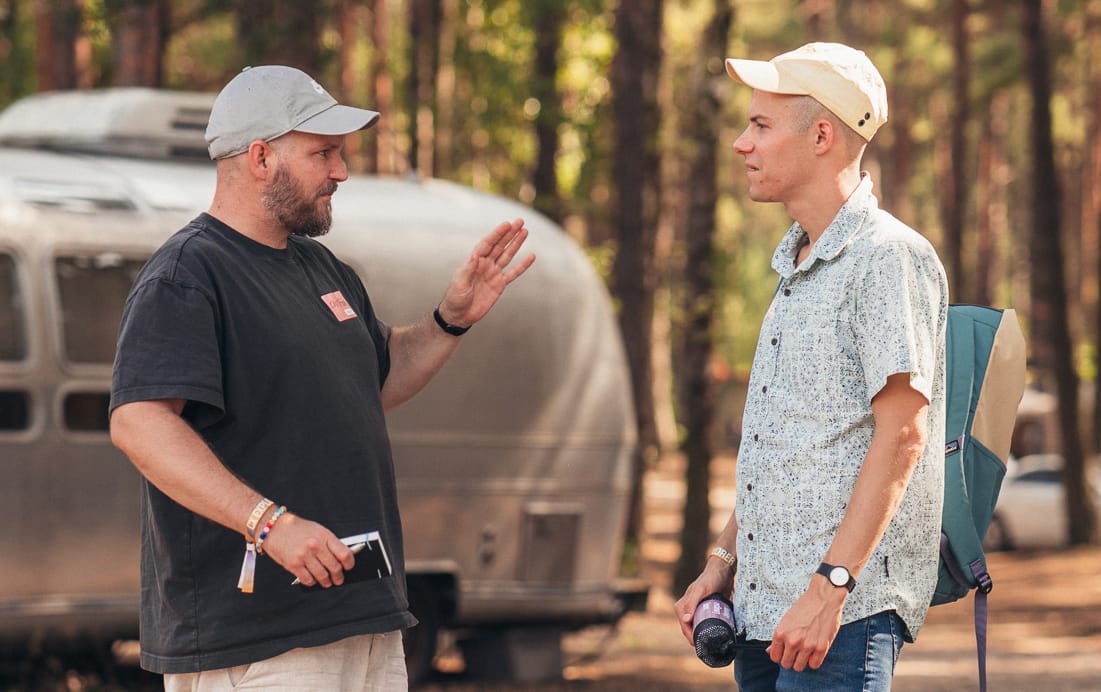
“I finished the marathon in 4 hours but I couldn’t walk the next day,” someone recently told me.
“But what!? You ran a marathon,” I retorted.
I know the feeling. I’ve done my fair share of endurance races. I’ve had the experience of being halfway through and listening to my brain try to tell my body, “don’t you think you could be just a tad bit faster or stronger? Maybe if you wouldn’t have skipped those last 2 miles of the long run 3 weeks ago…”.
And then I tell my brain to shut up and listen to the thousands of spectators that are here to cheer for me.

One of those moments (2017) when I knew the voices outside my head could be louder than the ones inside my head
We humans are really good at acknowledging what didn’t happen, what we think might be missing.
As the calendar year winds down and incomplete commitments pile up, this emphasis on the to-dos tends to strongly outweigh the ta-das.
Why do we so often undermine our accomplishments?
Why do we notice our mistakes before we notice what we did well?
The tendency toward scarcity reflects our mind’s desire to survive, to find the next source of energy, to be prepared for any possible weakness in our surroundings.
It might sound like:
But the problem is…
I did finish … but I didn’t …
But if I would have done this differently…
A lot of ifs, a seldom and, and very often the word but.
Years ago, when I trained customer service teams, I encouraged folks to look for “but” in their emails to customers. It appeared in sentences like “I’m sorry to hear about the trouble you’re having, but you’ve come to the right place.”
What happens in such a sentence? Everything before “but” gets erased. The “but” negates or contrasts the empathy expressed before it. It creates an unintended opposition, as if the two ideas are contradictory, when they’re not.
Which brings me to us.
Very often in my conversations with clients I hear “but the problem is” or “but what I didn’t know” or “but I should” or “but I’m not allowed to ”... these self-destructive phrases take many forms.
Sometimes, it helps to drop the but, to help our brains focus on what might get under-acknowledged.
And… “and” is a great word to slip in instead.
Perhaps part of the reason we want to say “but” is that it’s easiest for our mind to simplify. The cognitive load is lighter when we can get closer to a singular truth.
It helps to acknowledge that very few things are A OR B, black OR white, right OR left, right OR wrong. In many cases, it’s not one or the other, but some combination of both.
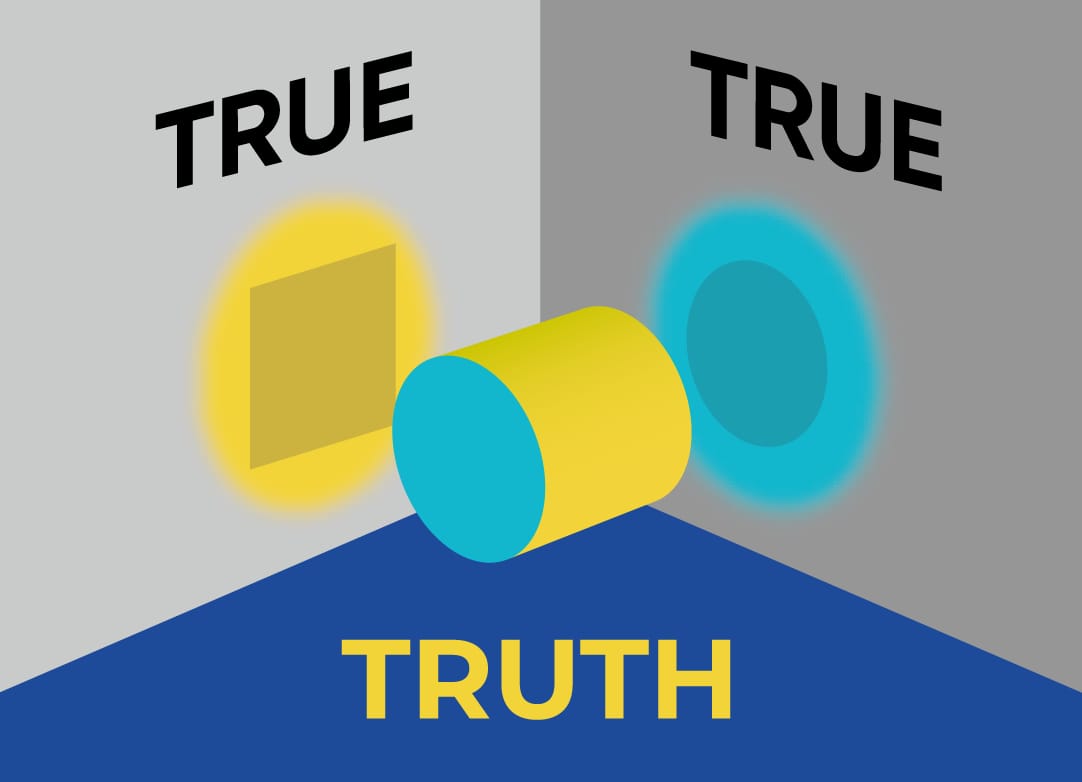
While we might have the thought that we could have or should have done something differently, it can also be the case that we did it, and we did it very well.
Reframing such a reinforced habit can be hard work (and… we can do hard things!) and… you don’t have to stop self-destructive speech alone.
If someone noticed you contradicting yourself or tearing down your successes with the word “but,” how would you want them to interject? If you caught yourself only seeing the negative side or the risks, how might you expand the lens to see other possible truths? The questions below might support you to shift toward acknowledging yourself more.
NOTE: The usual newsletter format will take a break in December, but ;) I’ll release two special editions before the end of the year. While the newsletter normally comes once a month, before the end of the year, you’ll receive one special end of year reflection offer (for you) and one special end of year reflection from me. Or maybe I’ll combine them - stay tuned!
And What Else:
Explore these questions, and embrace the challenge to dig deeper, asking what else might be relevant to answer.
Honor Yourself: What’s something that you gave/give yourself less than full credit for?
Explore Curiously: What room for improvement did you intend to acknowledge?
Foster Trust: How do you usually acknowledge yourself? How do you acknowledge both progress and process?
Shift Perspectives: What else do you notice when you look at yourself again?
Clarify Decisions: What would you like to give yourself more credit for?
Empower Action: What choice can you make now to give yourself full credit?
Nuggets of Work-Life
Every coaching session and workshop closes with acknowledging learnings, insights, and moments of celebration. Here are a few of my recent nuggets:
From the four new coaching clients that started working with me this month, I’m also seeing the power of honoring duality and spectrums. It’s inspiring to shift from the mental compulsion to see things as OR toward the possibilities of AND.
Earlier in November, Founders Hub Berlin invited me to support them with organizing a deep focus day. While I get to see the power of flow on a regular basis in Caveday’s virtual format, experiencing 4.5 hours of live deep focus was something else!
To prepare for some upcoming programming, I’ve also been conducting interviews with folks whose work and lives are disrupted by advances in artificial intelligence. I’m honored to hold space for both the frustration and opportunities that these disruptions generate. (If you or someone you know is interested to contribute, book some time on my calendar.)
We curled up on the couch on a recent evening, covered in blankets, thinking it was cold out, and stumbled upon this short documentary that totally changed my mind about being cold. The film tells the story of Samuil, a man who has spent the past 20 years living completely alone in the coldest place on Earth — deep in the Siberian wilderness, where temperatures drop to an unbelievable −71°C (−95°F). Cue: gratitude…
Practice Makes … Space for More Practice
A pastime: this month, I’m honoring Thanksgiving with a daily gratitude practice. Just one line in my notebook each day to notice what I’m appreciating or acknowledging in my environment. If a month feels like too much, maybe you just try it once. Connect your thoughts of gratitude to something mundane in your everyday routine (brushing your teeth, boiling water, etc.) And remember, you can always begin again.
In partnership with Caveday, I’ll also offer an hour of partially-guided gratitude practice on Wednesday, 26 Nov, 11 am ET, 5 pm CET. DM me for an invite if you’re curious to join.A recipe: as the leaves turn, my oven has been on more often than usual. For a super simple, egg-free cookie, try ANZACs, which take less than 20 minutes to prepare and less than 20 minutes to bake. Oven 175 °C / 350 °F. Mix 140g flour, 100g oats, 100g coconut with 120g golden raisins and 150g light brown sugar. Gently boil 115g of butter and 2 tablespoons of maple syrup; remove from the heat and add 1 teaspoon baking soda and ½ tsp salt once it starts boiling. Mix into the dry ingredients. Stir together 50g of oats and 25g coconut. Make round cookie dough balls and roll/coat them in the oat/coconut mixture. Bake for 18-20 minutes or until golden brown.
A movement: I was thrilled to uncover this slow, instrumental version of the YMCA by Winston Brey. It’s a great opportunity to move in slow motion and to take breaks between seated work or to get yourself off the couch for two minutes during an ad or commercial break.
Ways to Engage and Support
As mentioned earlier, I’m getting ready to release a special end-of-year transition offer. If you or someone you know have thought about coaching but don’t feel like the timing is quite right, or that you’re not ready for a multi-session commitment, this self-paced workbook might be for you. Stay tuned for the upcoming release, and take a moment to think about who else in your life might value an opportunity to be rooted in reflection and to commit to meaningful change & joy in every step.
In joy,
Stephen